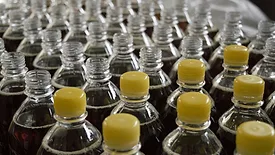

Through precision fermentation, engineered microbial “cell factories” can generate specific proteins that can serve as next-generation food ingredients.
Fermentation has evolved into precision fermentation, utilizing biotechnology to engineer microorganisms that produce high-value food ingredients. These "cell factories" create proteins and compounds, enhancing quality and reducing environmental impact.
Manufacturers are improving operator safety through third-party services, such as continuous training from OEMs, risk assessments and new production line approaches from consultants. In addition, digital training at the machine level is increasing operator safety.
Operator safety is becoming a critical lever for performance in food and beverage manufacturing. As workforce challenges intensify, processors are investing in automation, advanced HMI design and safer equipment to improve both retention and productivity.
It used to be that if you used one particular vendor’s automation products or sensors, you were locked in forever. With today’s open standards-based networks, users are no longer locked in and can shop around for sensors, industrial PCs, PLCs and industrial network devices.
Carryback presents not only a sanitation concern — it also leads to product loss and maintenance challenges. Here are some strategies for recovering product and keeping conveyors running smoothly.
Conveyor carryback is a serious issue in food processing facilities that can disrupt operations if not managed. Many facilities lack effective strategies to handle carryback, risking unscheduled downtime. Operators should implement preventative maintenance measures to minimize its impact.
Data silos and poor data quality continue to impact AI adoption in CPG manufacturing, recent research from Veev shows, but continuing integration and unification is helping.
AI is revolutionizing manufacturing with applications in predictive analytics and product development. Despite challenges like data silos and integration, progress is being made towards agentic AI. Discover how companies are adapting and what the future may hold.
Rethinking the operation could unlock more productivity, and the key to successful automated reverse packaging hinges on robot 3D vision system technology.
The agency is seeking information on adverse reactions to non-wheat gluten containing grains, as well as on oats for cross-contact with these ingredients.